


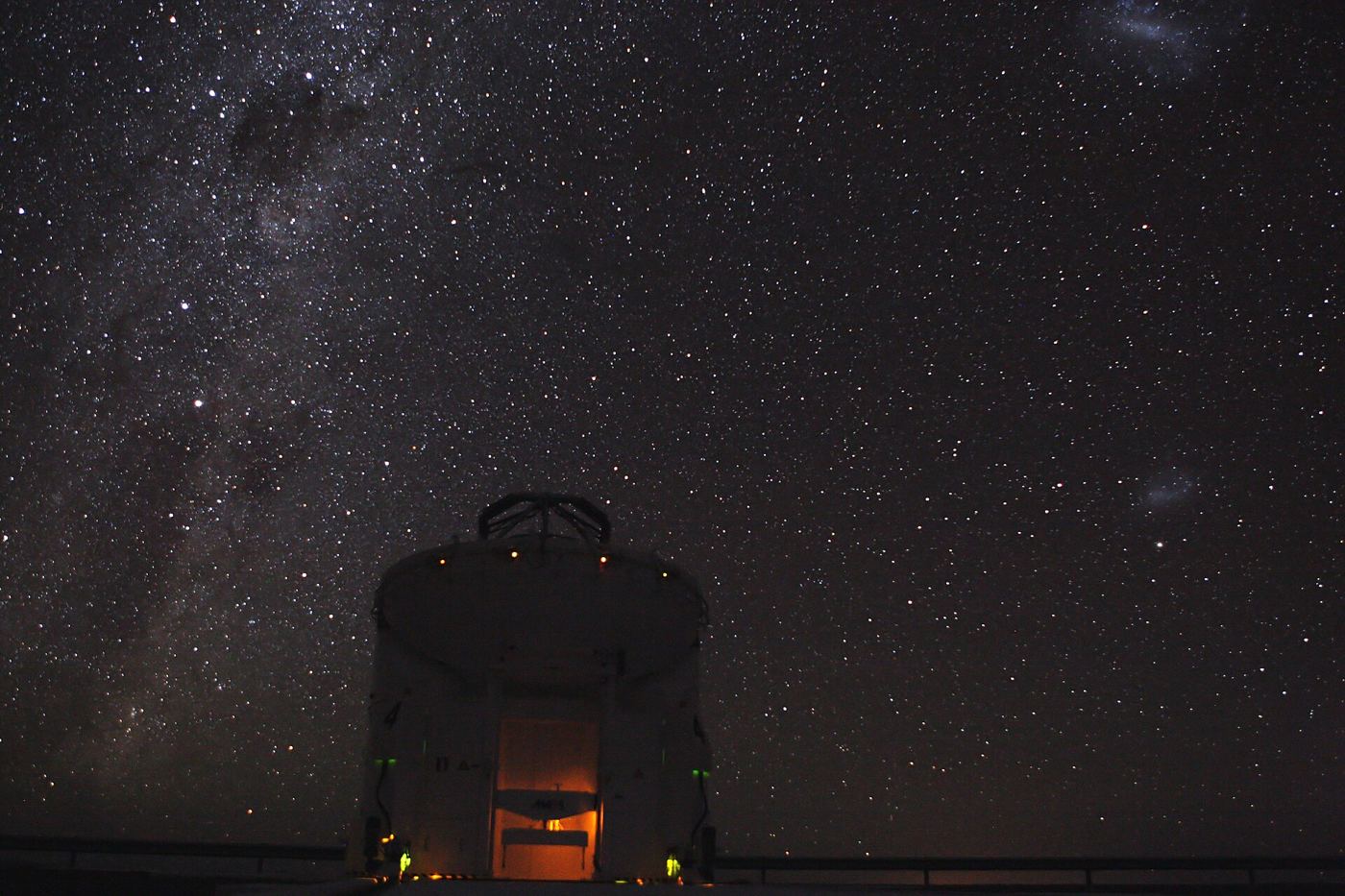
Stars are born in some of the darkest, coldest places in space, inside vast clouds of gas and dust that block ordinary visible light almost completely. Infrared telescopes, which can see through much of that dust, are now giving astronomers their clearest view yet of the process unfolding step by step. In the newest images, dense knots inside the clouds are collapsing under their own gravity, heating up as they shrink, and beginning to glow as young stars switch on for the first time. Around many of them, flattened discs of leftover material are clearly visible, the same kind of discs in which planets are thought to form. Astronomers say the striking part is the variety: some newborn stars emerge in tight clusters, jostling their neighbours, while others form in near isolation at the edge of a cloud. That variety may help explain why planetary systems look so different from one another. By comparing clouds of different ages within the same survey, researchers can also watch a kind of time-lapse of stellar birth, following regions from cold, quiet filaments through to bright clusters already clearing away the material that made them.
What the Evidence Shows
Making sense of the images takes more than sharp optics, because astronomers must separate the faint glow of a forming star from the bright background of the cloud around it. Teams now combine infrared pictures with radio observations that trace cold gas motions, revealing how material flows along filaments and feeds the growing cores. Computer models tested against these combined data sets have improved noticeably, and several long-standing predictions about how quickly discs fragment have had to be revised. One recurring finding is that magnetic fields threading through the clouds appear to slow collapse in some regions, acting like a gentle brake on star formation. Another is that the most massive stars, though rare, reshape their surroundings so strongly that they can trigger or halt birth in neighbouring pockets of gas. For planet hunters, the disc images are especially valuable, because gaps and rings in the dust may mark where young planets are already gathering material. Researchers plan to revisit the same clouds over coming years, watching for changes in brightness that signal feeding bursts. Reporting and analysis from sources such as NASA track the same developments, and specialists following the star-forming dust clouds say the direction is now consistent across independent lines of evidence.
The Wider Context
Funding bodies are watching the star-forming dust clouds closely because the work sits at the junction of basic curiosity and practical return. Grant panels increasingly ask for a path from discovery to application, while researchers push back that the most valuable uses of fundamental science are rarely the ones written into the original proposal. The tension is productive when both sides stay honest about timescales.
What Happens Next
The long view on the star-forming dust clouds is that fields advance by accumulation rather than by single announcements. This result adds a solid, checkable piece to a structure many teams are building, and its authors have shared their data so the piece can be tested from every side. That is how the picture eventually becomes reliable enough to act on. You can follow related developments in our coverage of science.
It is also worth remembering how quickly the picture in this area has changed before. Positions that looked settled a few years ago have been revised as new data arrived, and the same humility is appropriate now. The strongest coverage of this subject, and the most useful advice, tends to come from sources that update their views openly when the facts move, rather than defending an earlier position long after it has stopped fitting the evidence available.
