


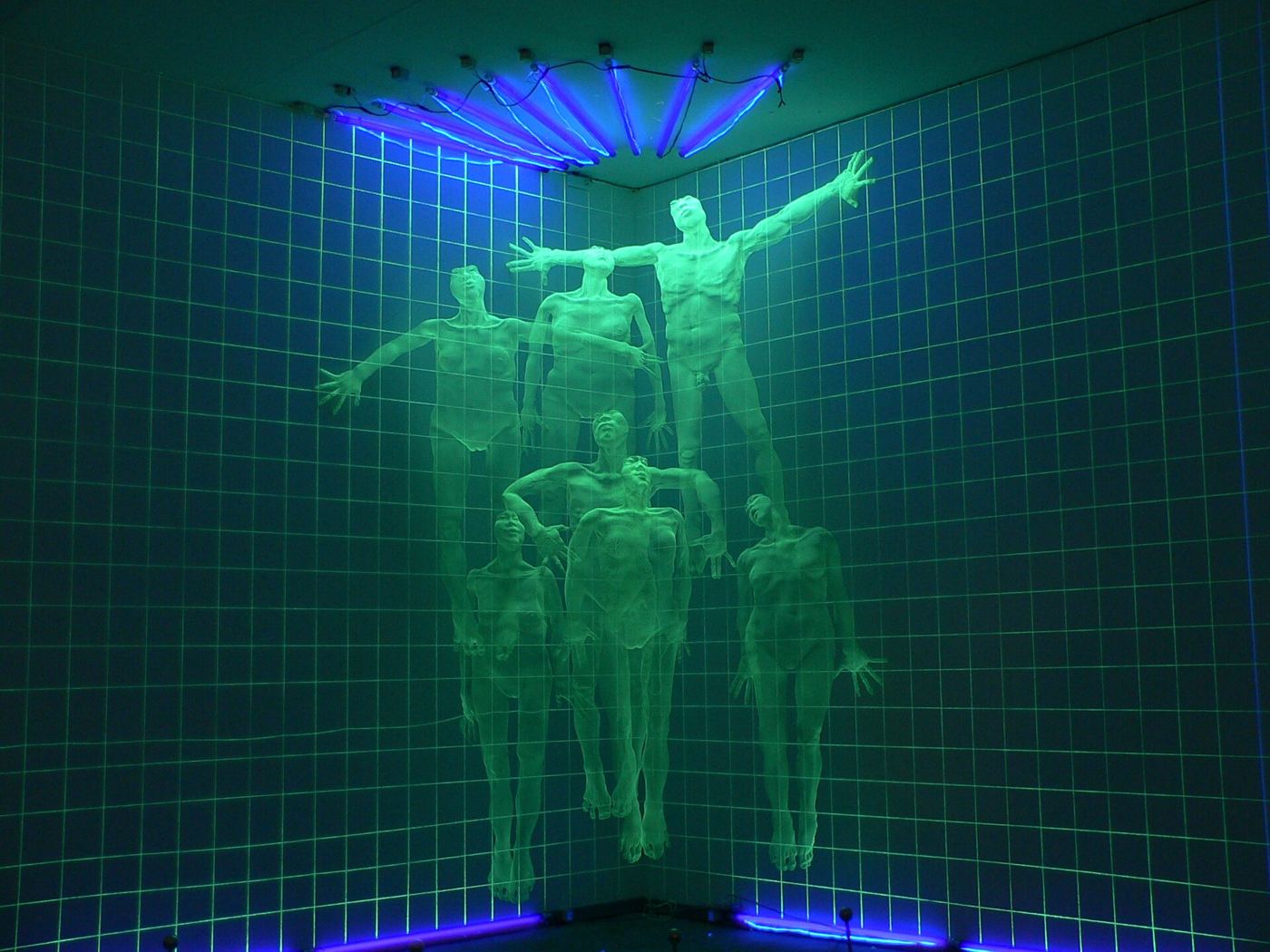
Science fiction has long promised holograms, images that float in the air and can be walked around, but real displays have mostly been flat screens or headsets. That is starting to change. New displays use arrays of tiny lenses or fast-spinning panels to send different images to each eye, creating a three-dimensional picture that can be seen without glasses. Doctors are using them to study a patient’s heart in 3D before surgery, car makers are testing dashboards that project navigation onto the road ahead, and designers are reviewing car models as floating images they can walk around. Some systems use lasers to draw images in the air itself, while others use light fields that recreate the way light bounces off a real object.
What the Evidence Shows
The displays are still expensive and limited. The images are often small, dim or visible only from a narrow angle, and the most convincing systems need powerful computers to calculate the light field in real time. Researchers are working on brighter materials, wider viewing angles and cheaper ways to build the displays, and companies are finding the first practical uses in medicine, design and advertising. A surgeon who can turn a 3D scan of a heart in the air before an operation may spot a problem a flat screen would hide. Experts say the technology will reach living rooms only when it becomes cheap and bright enough to compete with a television. Until then, its home is the laboratory, the operating theatre and the design studio. Reporting and analysis from sources such as Wired track the same developments, and specialists following the holographic display technology say the direction is now consistent across independent lines of evidence.
The Wider Context
The wider context is an industry learning to ship capability and restraint together. Products built around the holographic display technology now launch with safety evaluations, usage data and rollback plans as standard, because enterprise buyers and regulators ask for them in the first meeting. Companies that treated those questions as friction are discovering they have become the purchase criteria.
What Happens Next
What happens next for the holographic display technology depends less on another breakthrough than on the unglamorous work of reliability, pricing and support. The buyers evaluating it now are not enthusiasts; they are operators with budgets and auditors, and their checklists will decide the timeline. On the evidence of the current pilots, the technology has earned the right to be judged by them. You can follow related developments in our coverage of technology.
None of this will be settled by a single announcement, study or product launch. The pattern to watch is accumulation: independent confirmations, honest reporting of failures and steady improvement in the underlying numbers. Readers who follow those signals, rather than the loudest claim of the week, will understand this subject better than most of the commentary surrounding it suggests is possible.
