


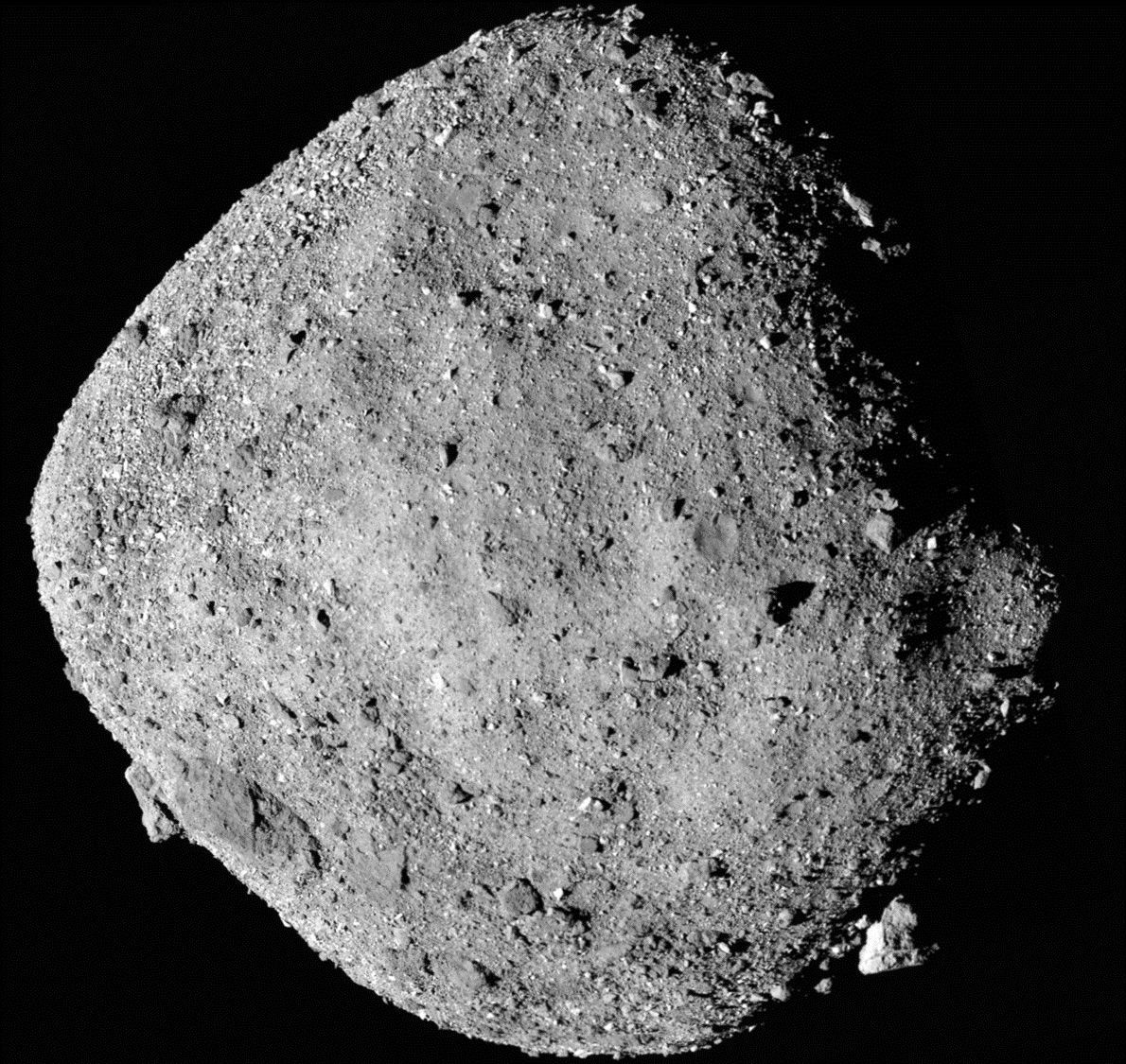
When NASA’s OSIRIS-REx spacecraft dropped a capsule of asteroid dust into the Utah desert in September 2023, it delivered about 121.6 grams of material from the asteroid Bennu, roughly double the mission’s goal. Studies published in early 2025 revealed what was inside: researchers identified 14 of the 20 amino acids that life on Earth uses to build proteins, along with all five nucleobases used in DNA and RNA, plus ammonia and a wide range of nitrogen-bearing organic molecules. A companion study found salts and minerals, including sodium-rich carbonates and phosphates, that appear to have formed when salty water evaporated on Bennu’s parent body billions of years ago. The findings suggest the parent body once held liquid water, creating conditions where organic chemistry could develop. Bennu itself is a rubble pile about 500 metres across, a fragment of a larger asteroid that broke apart in the early Solar System.
What the Evidence Shows
Scientists are careful about what the results do and do not mean. The compounds are ingredients, not life, and similar molecules have been found in meteorites and in samples from Japan’s Hayabusa2 mission to the asteroid Ryugu. What makes Bennu special is that the material was collected from a known source and kept pristine, so researchers can be confident the chemistry is genuinely extraterrestrial. The amino acids are a mix of left- and right-handed forms, with no preference for the left-handed versions that life on Earth uses, which deepens the mystery of why life chose one form over the other. Later analyses even found ribose, the sugar that forms the backbone of RNA, and glucose. Together, the results support the idea that asteroids like Bennu may have delivered the raw ingredients of life to the young Earth. Reporting and analysis from sources such as NASA track the same developments, and specialists following Bennu asteroid sample findings say the direction is now consistent across independent lines of evidence.
The Wider Context
Funding bodies are watching Bennu asteroid sample findings closely because the work sits at the junction of basic curiosity and practical return. Grant panels increasingly ask for a path from discovery to application, while researchers push back that the most valuable uses of fundamental science are rarely the ones written into the original proposal. The tension is productive when both sides stay honest about timescales.
What Happens Next
The long view on Bennu asteroid sample findings is that fields advance by accumulation rather than by single announcements. This result adds a solid, checkable piece to a structure many teams are building, and its authors have shared their data so the piece can be tested from every side. That is how the picture eventually becomes reliable enough to act on. You can follow related developments in our coverage of science.
It is also worth remembering how quickly the picture in this area has changed before. Positions that looked settled a few years ago have been revised as new data arrived, and the same humility is appropriate now. The strongest coverage of this subject, and the most useful advice, tends to come from sources that update their views openly when the facts move, rather than defending an earlier position long after it has stopped fitting the evidence available.
