


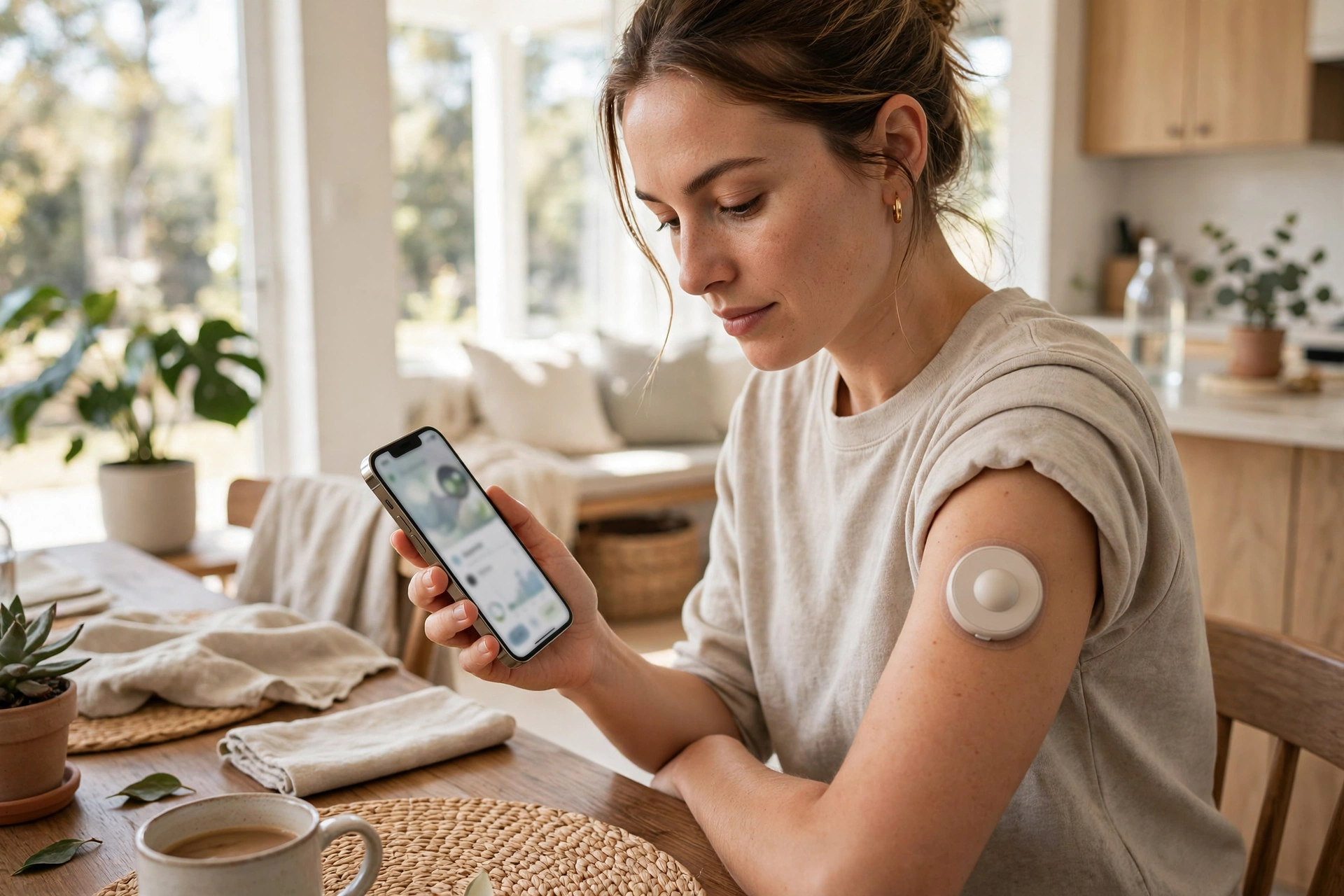
A small wearable sensor is delivering outsized results for people with type 2 diabetes. In the largest clinical trial of its kind, published in the New England Journal of Medicine, adults with type 2 diabetes who do not use insulin spent roughly five more hours each day in their target blood sugar range when they used a continuous glucose monitor, or CGM, compared with standard care. The findings strengthen the case that a technology once reserved mainly for insulin users could help millions more people manage their condition day to day.
How Continuous Glucose Monitors Work
A continuous glucose monitor is a small sensor, usually worn on the upper arm or abdomen, that measures glucose levels in the fluid just under the skin every few minutes. Instead of a handful of finger-prick readings, users get a near-constant stream of data sent to a phone or receiver, complete with trend arrows showing whether levels are rising, falling or steady. That context changes behavior: a person can see within minutes how a meal, a walk or a stressful meeting affects their body, and adjust before levels drift out of range.
Researchers behind the new trial say that feedback loop is the likely reason for the improvement. Participants were not given a new drug; they were given information, delivered at the moment decisions are made. Reporting on the study from the University of Colorado Anschutz Medical Campus describes the gain as approximately five additional hours per day spent in the healthy target range, a difference clinicians consider meaningful for long-term complications.
Why Five Hours Matters
Time in range has become one of the most watched measures in diabetes care because it captures what a single average cannot. Two people can share the same average glucose while one swings dangerously between highs and lows. More hours in range generally means fewer damaging spikes, more stable energy and, over years, a lower risk of the eye, kidney and nerve complications that make diabetes so burdensome. For people who manage the condition without insulin, options to improve control beyond medication and lifestyle advice have historically been limited, which is what makes a wearable-led improvement notable.
The trial also matters for equity. Type 2 diabetes is far more common than type 1, and it disproportionately affects communities with less access to specialist care. A self-managed device that works without intensive clinic support could narrow some of that gap, provided cost and insurance coverage do not put it out of reach.
The Access Question
That coverage question is now the central debate. CGMs are typically far more likely to be reimbursed for people who use insulin, while many people with type 2 diabetes who manage with oral medication pay out of pocket or go without. Advocates argue that evidence like this trial should change prescribing and payment policies, because preventing complications is cheaper than treating them. Manufacturers are also pushing sensor prices down and extending wear time, which strengthens the economic argument.
Technology is helping in other parts of care too. As our coverage of making gaming more accessible showed, thoughtful design can open experiences and tools to people who were previously excluded, and health wearables are following the same pattern: simpler setup, clearer apps and less stigma in everyday wear.
What Comes Next for Diabetes Tech
The next step is integration. Glucose data already flows into apps that log meals, activity and sleep, and researchers are testing systems that combine those signals into personalized coaching. Clinicians are also learning how to review CGM reports efficiently during short appointments, so the data leads to action rather than overload. Regulators and insurers will decide how quickly trial evidence becomes routine care, but the direction is clear.
For the millions of people who check their blood sugar and wonder whether they are doing enough, five extra healthy hours a day is not an abstract statistic. It is proof that better information, delivered continuously and worn almost invisibly, can quietly change the daily reality of a chronic disease.
