


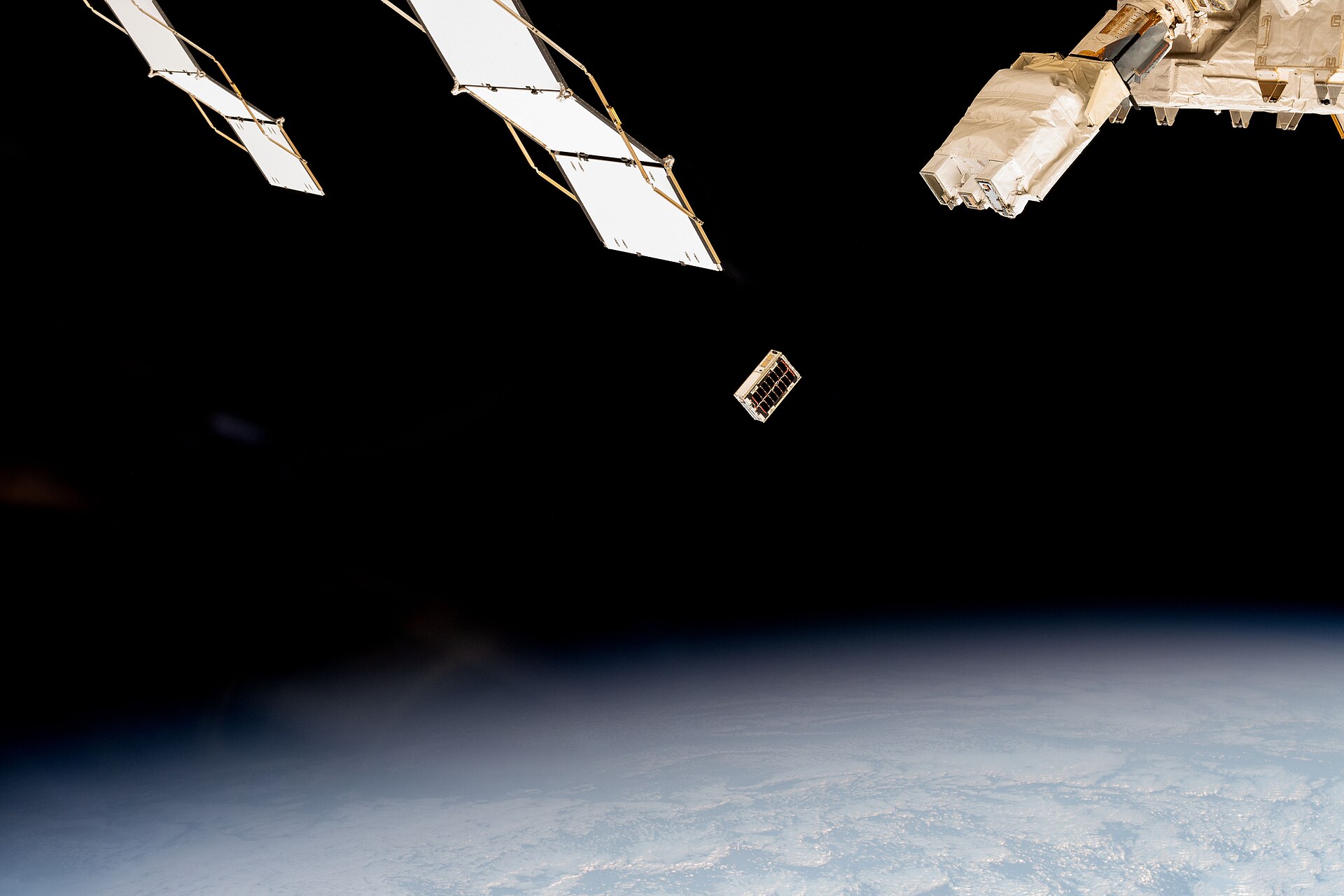
For decades, removing dead satellites from orbit was a conference topic. It has become a business: demonstration missions have docked with client satellites to extend their lives, inspection spacecraft have flown close surveys of rocket bodies, and agencies are signing contracts to remove specific pieces of junk. The orbital clean-up industry exists; the question is its scale.
The first jobs are inspections and life extension
The earliest revenue has come not from disposal but from looking and helping: spacecraft that rendezvous with a client’s satellite to inspect damage, and servicers that dock with a healthy satellite whose fuel is spent and provide the propulsion to keep it earning. Life extension is debris prevention by another name, delaying the day the satellite becomes junk.
These missions matter beyond their fees. Every rendezvous and docking retires technical risk for the harder removal jobs, and builds the operational record insurers and regulators need before clean-up can become routine.
How you catch something travelling at eight kilometres a second
Removal concepts divide by target. Cooperative satellites can carry docking plates fitted before launch, making future collection straightforward, a practice standards bodies are pushing to make universal. Uncooperative debris, dead, tumbling, never designed to be touched, is the hard case: chasers must match its tumble, then capture it with nets, harpoons, robotic arms or magnetic plates, each tested in demonstrations with varying drama.
The final act is disposal: dragging the object down to burn in the atmosphere, a manoeuvre that must be controlled enough to satisfy the rules about where debris may re-enter.
Who pays for a cleaner sky
The emerging answer is a mix: owners paying to retire their own liabilities, agencies funding removal of the most dangerous legacy objects, and licensing regimes that increasingly require an end-of-life plan, and the means to execute it, before launch. Extended producer responsibility, familiar from electronics and packaging, is arriving in orbit.
The economics remain steep: a bespoke removal mission costs a significant fraction of a launch. The industry’s roadmap depends on multi-object servicers that remove several targets per flight, spreading the cost the way a refuse round does, and on standardised interfaces making capture cheap and predictable.
For more coverage of the stories shaping the day, visit our homepage and the latest reporting in Finance.
The most dangerous objects are known
Risk analyses consistently identify a shortlist: massive dead satellites and rocket bodies in crowded orbits, whose collision with anything would create thousands of new fragments. Modelling suggests removing a handful of the worst objects each year materially reduces the long-term debris growth, a rare case where a tractable action addresses a civilisational-scale problem.
These objects mostly belong to governments, which makes their removal a diplomatic as much as a technical exercise, since one state’s servicer approaching another state’s dead satellite looks, from certain angles, like a capability demonstration. Transparency frameworks are being built to keep clean-up visibly peaceful.
Prevention remains the bargain
Every removal specialist says the same thing: the cheapest debris is the kind never created. Passivation of rocket stages, reliable deorbiting, and design for demise deliver more risk reduction per unit of money than any capture mission, and regulation is pushing all three from courtesy to condition of licence.
Clean-up and prevention are complements, not rivals: prevention stops the problem growing, removal draws down the legacy risk that prevention cannot touch. The industry’s maturity will be measurable in the ratio between the two, and in whether the curve of total orbital mass finally bends.
Further reading: NASA and Reuters.
A new kind of environmental industry has formed, eight hundred kilometres overhead, staffed by people who describe dead satellites the way harbourmasters describe wrecks: as hazards with owners, histories and removal costs. That ordinariness is the achievement. Orbit is becoming a managed place.
