


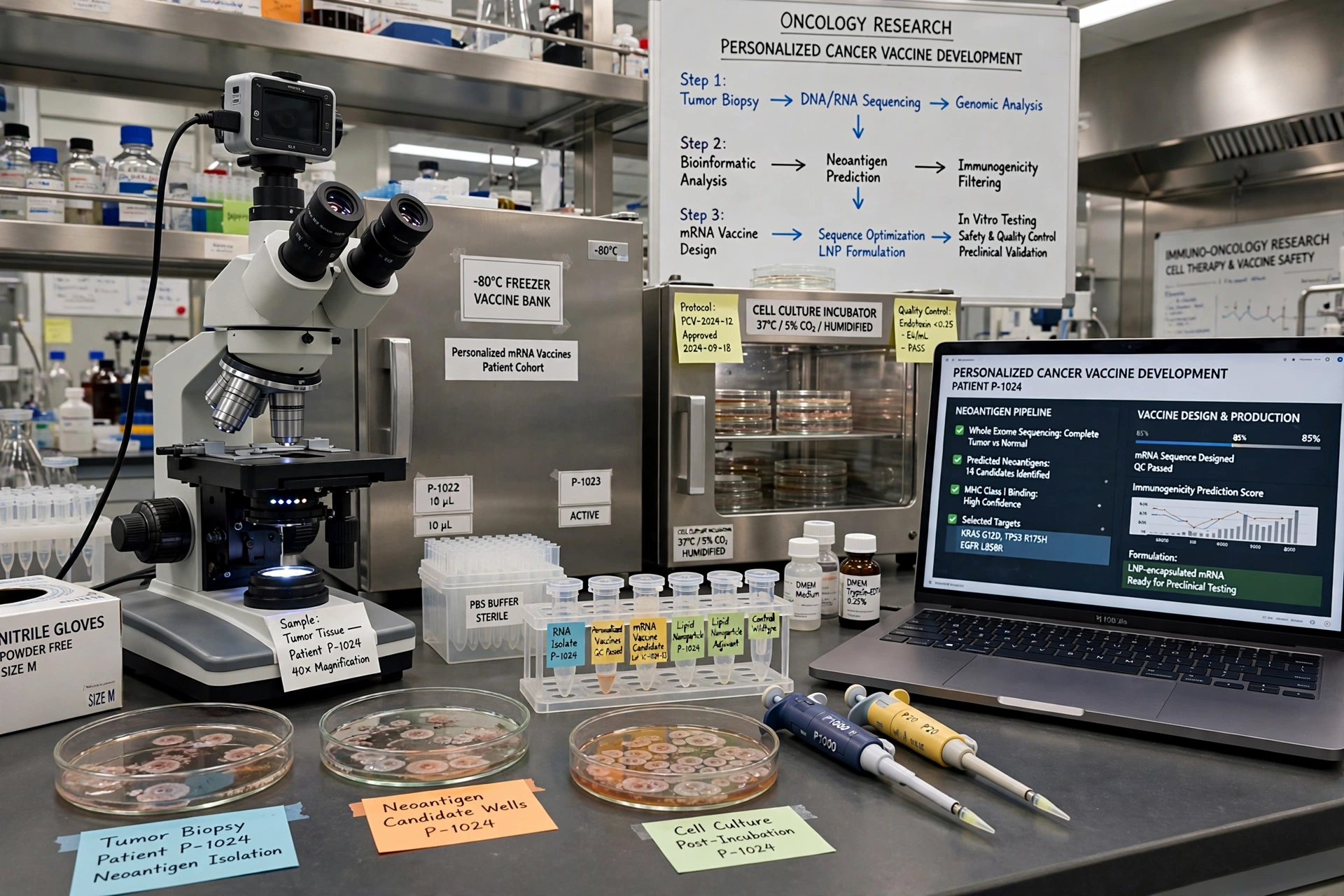
Cancer treatment is slowly moving towards therapies built for one patient at a time. In a phase 1 trial published in Nature Medicine, researchers tested NeoVax, a personalised vaccine created from the mutations in each woman’s own ovarian tumour, together with the immunotherapy drug nivolumab. The participants had platinum-sensitive disease, meaning their cancers had previously responded to platinum chemotherapy. The investigators concluded that making and delivering the vaccine was feasible and that the combination’s safety profile was acceptable, clearing an essential early step for this kind of bespoke medicine.
From Tumour Sample to Tailor-Made Vaccine
The process begins with sequencing. Clinicians compare DNA from a tumour biopsy with DNA from healthy blood cells to find mutations unique to the cancer. Algorithms then predict which mutated fragments, called neoantigens, are most likely to be displayed on tumour cells and recognised by the immune system. A vaccine is manufactured around the strongest candidates and returned to the clinic for a series of injections. Unlike off-the-shelf drugs, every batch is different, which makes quality control, scheduling and cost far more complicated than with a standard medicine that can be produced in bulk and stored.
Why Nivolumab Was Added to the Mix
A vaccine can teach immune cells what to look for, but tumours often apply the brakes to those same cells. Nivolumab blocks a checkpoint protein that cancers exploit to quieten T cell attacks, so pairing it with NeoVax is a deliberate one-two strategy: first expand an army of tumour-aware T cells, then stop the cancer from switching them off. Whether that logic translates into longer remissions is exactly what later, larger trials must determine. For context on how carefully early health claims should be read, see our coverage of a major glucose monitor trial in type 2 diabetes.
Reading Phase 1 Results Without Overstating Them
Phase 1 trials answer practical questions: can the product be made, can patients receive it as planned, and do side effects stay within acceptable bounds? They are not powered to prove that a vaccine shrinks tumours or extends life, and this study should be reported accordingly. The journal Nature Medicine publishes such early work because feasibility data shapes everything that follows, from dosing schedules to which patients future trials should recruit. Encouraging immune responses in blood tests are a good sign, yet history is full of cancer vaccines that looked promising early and disappointed when tested rigorously at scale.
The Practical Hurdles Behind Personalised Medicine
Even if later trials succeed, delivering a unique vaccine to every patient is a serious logistical challenge. Tumour tissue must be collected, shipped, sequenced and manufactured under pharmaceutical standards, all while the patient’s disease is being managed. Any delay risks the cancer changing or returning before treatment begins. Costs are currently high, and health systems would need convincing evidence of benefit before funding such programmes widely. Researchers are working on faster sequencing and automated production, but those improvements are still being proven. For now, NeoVax remains a research treatment available only through clinical studies, not a service patients can request at a routine appointment.
What This Means for Patients and Families
For women living with ovarian cancer, the fair takeaway is cautious encouragement. A well-conducted early trial has shown that a highly personalised vaccine approach can be delivered alongside checkpoint therapy without unacceptable safety problems, and that justifies bigger studies with control groups and survival endpoints. Anyone considering a trial should ask their oncologist about eligibility, timelines and what participation would involve day to day. Hope matters in cancer care, and so does accuracy: this is a promising first chapter in a long evaluation, and the chapters that decide whether NeoVax truly helps patients are still to be written and independently verified.
How to Follow This Story Responsibly
Developments in personalised vaccination will arrive in stages, and each stage deserves its own headline rather than a borrowed one. The next milestones to watch for are the opening of a larger randomised trial, its recruitment progress, and eventually peer-reviewed results on recurrence and survival. Reputable updates will state clearly which question each study answered and which it did not. Readers can help by sharing stories that keep those distinctions intact, especially within patient communities where hope travels fast. Measured reporting is not pessimism; it is how early findings like these are protected from hype, so that if NeoVax does prove itself, its success will be believed for the right, evidence-based reasons by everyone watching.
